Discover how tear-film health, eyelid glands, hormones, screen habits, environment and nutrition can work together—and where targeted fatty-acid support may fit into your routine.
Guidance from Dr. Rudrani Bank - Board Certified Ophthalmologist

Burning or stinging
Gritty or sandy feeling
Watery eyes
Fluctuating vision
Contact-lens discomfort
Screen-related irritation
New pain, significant redness, discharge, sudden vision changes or symptoms affecting only one eye should be evaluated promptly.

Mild redness and visible vessels can accompany dry eye symptoms, although redness has many possible causes.

Inflammation and debris along the lash line can contribute to burning, grittiness and tear-film instability.
“The most effective routine begins by understanding what is contributing to your symptoms.”
Dr. Rani
Your tears need the right balance of water, oil and mucin to remain stable between blinks.
When the eyelid oil glands are not working well, tears may evaporate too quickly.
Perimenopause, menopause and other hormonal shifts can affect the ocular surface and tear production.
Focused screen use often lowers blink rate and increases evaporation from the eye's surface.
Dry air, wind, contact lenses and some medications can all contribute to symptoms.
Food choices and hydration are supportive pieces of a broader eye-health routine.
Build a foundation with hydration, a colorful whole-food diet and targeted fatty-acid nutrition when appropriate.
Support eyelid health with warm compresses and lid hygiene as recommended for your individual needs.
Use intentional blinking, screen breaks, humidification and environmental adjustments to reduce excess evaporation.
Support cell-membrane structure and the body's normal inflammatory response.
Complements the formula's balanced fatty-acid profile.
Studied for its role in supporting healthy mucous membranes, including the ocular surface.
Rounds out a comprehensive, food-inspired fatty-acid profile.


Founder • Ophthalmologist • IFMCP
In my practice, I have seen how dry eye, nutrition, hormones, screen habits and systemic health can intersect. I created Eye Omega to offer a thoughtful fatty-acid foundation that fits naturally within a more complete approach to eye health.
The goal is simple: transparent nutritional support within a comprehensive, physician- guided approach to lifelong eye health.
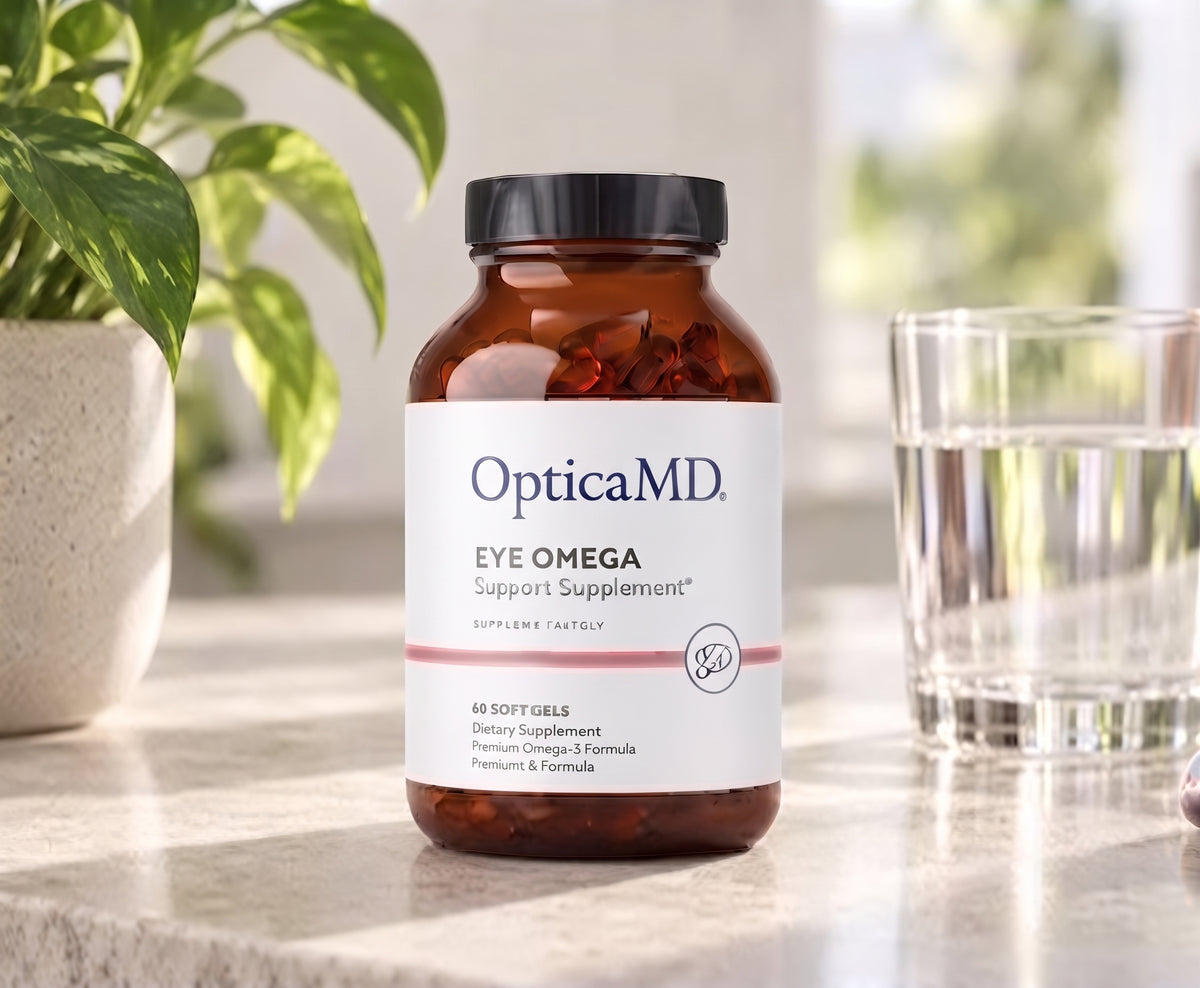
Eye Omega is a complete omega formula designed to support eye health, including the ocular surface, tear film and a healthy inflammatory response. Its omega 3 EPA and DHA, together with GLA, provide anti inflammatory omega support as one part of a broader approach that may also include eyelid care, healthy screen habits, environmental changes and guidance from your eye care professional.
DHA is an important structural fatty acid in the retina, and omega 3 rich eating patterns, particularly those that include fish, have been associated with retinal health. Research has not shown that omega 3 supplements prevent AMD or slow its progression, so anyone with AMD should continue the care plan and any AREDS2 supplement recommended by their eye doctor.
Eye Omega was created as a complete omega blend designed to support eye health rather than an EPA/DHA-only product. Omega 6 GLA, omega 7 and omega 9 complement EPA and DHA, with each fatty acid contributing a different structural or physiologic role to the formula's comprehensive nutritional profile.
The two products are designed to be complementary: Eye Omega provides complete fatty acid and anti inflammatory omega support, while Daily Vision provides targeted micronutrients and antioxidants. Review both labels with your healthcare professional if you use medications or other supplements.
Check with your healthcare professional before use if you are pregnant or nursing, have a medical condition or fish allergy, take blood-thinning medication, or are preparing for surgery.